













In short. On a construction site the gap between IP54 and IP44 is smaller than the figures suggest. Their second digit is the same – 4: both withstand splashing from any direction, but neither protects against a water jet – that requires digit 5 or 6. Only dust protection differs, and the wording matters: 5 means dust-protected, not dust-tight. Dust will get inside an IP54 enclosure too, just less than with IP44, and in amounts that do not interfere with operation. Only IP6X keeps dust out completely. The practical conclusion: choosing between IP44 and IP54 does not remove the main requirement – on an open site the panel must stand under a canopy, otherwise rain or a jet from a pressure washer reduces the one-point difference to nothing.
1. Structure of the IP code per GOST 14254-2015
The protection rating marking of an electrical equipment enclosure (Ingress Protection) defines the limits of safe operation of a device in an external environment. In Russia and the EAEU countries, the interstate standard GOST 14254-2015 applies, which is identical to the international IEC 60529:2013. The code consists of the fixed letters IP and two characteristic digits; when required, an additional and a supplementary letter are appended to them. If a particular protection rating is not specified or was not tested, the symbol X is placed instead of the corresponding digit (for example, IPX5).
The first characteristic digit describes protection against the ingress of solid foreign objects and dust, as well as protection of personnel against access to hazardous live parts. The second characteristic digit describes protection against the harmful effects of water. The additional and supplementary letters are used rarely and carry clarifying information. For portable distribution units (RUSP – raspredelitelnoye ustroystvo, perenosnoye), operated on construction sites, correct interpretation of the entire IP scale – not just the IP44/IP54 pair – makes it possible to precisely match the enclosure to the actual conditions of the site.
2. The first characteristic digit (0–6): protection against solid objects and dust
According to GOST 14254-2015, verification of the first digit is performed with calibrated test probes (a sphere, a jointed "finger", a rod, a wire) applying a standardized pushing force, and for digits 5 and 6 – in a dust chamber with talc. The geometric dimensions of the probes are precisely the source of the numerical values "diameter greater than N mm" in the table below.
| First digit | Protection against access to hazardous parts | Protection against solid objects | Test means (GOST 14254-2015) |
|---|---|---|---|
| 0 | No protection | No protection | – |
| 1 | Back of the hand | Objects Ø ≥ 50 mm | Rigid sphere Ø 50 mm |
| 2 | Finger | Objects Ø ≥ 12.5 mm | Jointed test finger Ø 12.5 mm |
| 3 | Tool | Objects Ø ≥ 2.5 mm | Rod Ø 2.5 mm |
| 4 | Wire | Objects Ø ≥ 1.0 mm | Wire Ø 1.0 mm |
| 5 | Wire | Dust-protected: dust ingress is not entirely prevented, but only in an amount that does not impair operation | Dust chamber (talc), reduced pressure inside the enclosure |
| 6 | Wire | Dust-tight: complete absence of dust ingress | Dust chamber (talc), reduced pressure inside the enclosure |
3. The second characteristic digit (0–9): protection against water
The second digit determines the enclosure's resistance to water – from vertically falling drops to high-pressure and high-temperature jets. The numerical parameters (water flow rate, nozzle diameter, distance, pressure) are taken from the test procedures regulated by GOST 14254-2015.
| Second digit | Protection condition | Test parameters (GOST 14254-2015) |
|---|---|---|
| 0 | No protection | – |
| 1 | Vertically falling drops | Drip box, exposure 10 min |
| 2 | Falling drops with the housing tilted up to 15° | Drip box, 4 tilt positions of 2.5 min each |
| 3 | Rain (sprayed water) at an angle up to 60° from the vertical | Oscillating tube or hand-held spray nozzle |
| 4 | Splashing from any direction | Oscillating tube (angle up to 180°) or spray nozzle |
| 5 | Water jets from any direction | Nozzle Ø 6.3 mm, flow 12.5 L/min, distance 2.5–3 m, 1 min/m² (at least 3 min) |
| 6 | Powerful water jets (marine conditions) | Nozzle Ø 12.5 mm, flow 100 L/min, distance 2.5–3 m, 1 min/m² (at least 3 min) |
| 7 | Temporary immersion in water | Depth up to 1 m (top of enclosure ≥ 15 cm under water), 30 min |
| 8 | Continuous immersion in water | Deeper than 1 m, conditions agreed between manufacturer and user |
| 9 | High-pressure, high-temperature water jets | Pressure 8–10 MPa, temperature 80 ± 5 °C, flow 14–16 L/min, distance 100–150 mm, angles 0/30/60/90° |
GOST 14254-2015 and IEC 60529:2013 introduced the IPX9 rating. The marking IPX9K (with the letter K) frequently seen in catalogs originates from the automotive standard ISO 20653 and formally belongs to a different regulatory document. The test parameters are similar; however, the ISO 20653 and GOST 14254-2015 procedures differ in details (specimen fixation, number of positions, tolerances).
4. The additional and supplementary letters of the IP code
These letters are optional. The additional letter indicates the actual protection against access to hazardous parts if it is higher than that guaranteed by the first digit. The supplementary letter reflects the test conditions or the type of equipment.
| Letter type | Letter | Meaning (GOST 14254-2015) |
|---|---|---|
| Additional | A | Protection against access with the back of the hand |
| Additional | B | Protection against access with a finger |
| Additional | C | Protection against access with a tool Ø 2.5 mm |
| Additional | D | Protection against access with a wire Ø 1.0 mm |
| Supplementary | H | High-voltage apparatus |
| Supplementary | M | Water test with the moving parts of the equipment in motion |
| Supplementary | S | Water test with the parts of the equipment stationary |
| Supplementary | W | Protection under specified weather conditions |
5. Detailed comparison of IP44 and IP54
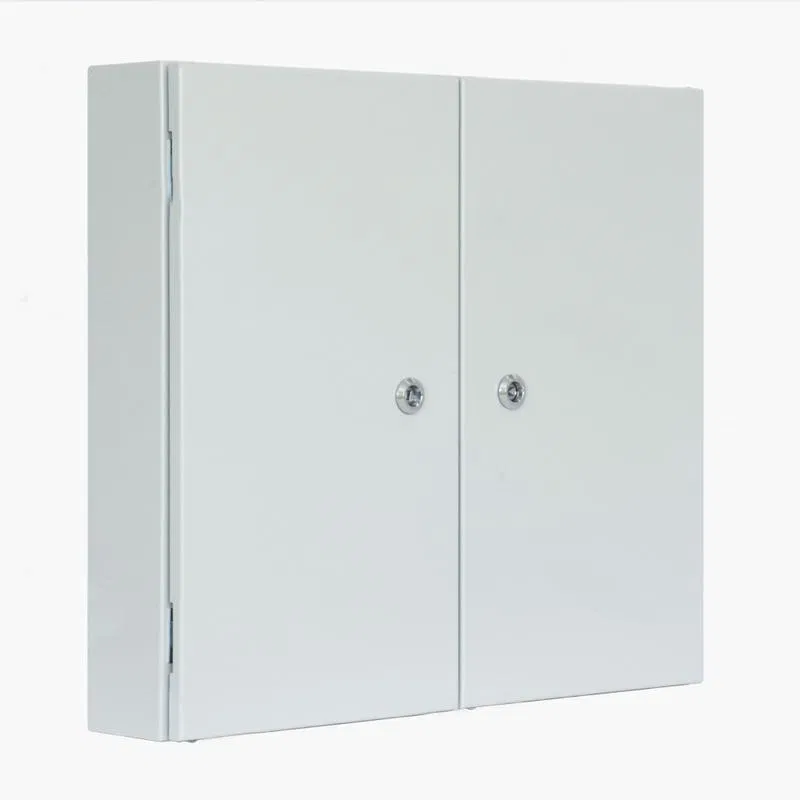
As applied to portable RUSP panels, the most in-demand ratings are IP44 (the minimum for outdoor use under a canopy) and IP54 (open mounting in a dusty environment). The key difference lies precisely in the first digit: "4" allows dust ingress, while "5" makes the enclosure dust-protected.
| Enclosure comparison parameter | Protection rating IP44 | Protection rating IP54 |
|---|---|---|
| Protection against solid objects | Ingress of objects Ø ≥ 1.0 mm is prevented (calibrated wire) | Dust-protected (only minor ingress of non-conductive dust is permitted) |
| Dust-ingress testing | Not performed | Mandatory test in a chamber with circulating talc under reduced pressure |
| Protection against liquids | Protection against splashing water falling from any angle | Protection against splashing water of comparable intensity |
| Design features of the cable entries | Plastic stepped entries (basic-level cable glands) | Soft cable glands with a clamping nut and a rubber ring |
| Outdoor mounting without a canopy | Not recommended: IP44 is designed for splashes, not for rain under pressure; a hood or installation under a roof is required | Allowed provided that direct water jets are excluded |
Despite the identical second digit "4" (protection against splashing), the overall weather resistance of IP54 is higher than that of IP44: the dust seals required to achieve the first digit "5" mechanically impede the capillary seepage of moisture during slanting, wind-driven rain.
6. Methodology of laboratory testing of enclosures
The assignment of the IP44 and IP54 ratings is carried out not visually but according to the instrumental tests of GOST 14254-2015. Verification of the first digit "5" (dust protection) is performed in a sealed chamber with circulating talc sifted through a sieve with a 75 µm mesh, while creating reduced pressure inside the housing to simulate thermal suction.
The calculation of the standard air flow rate during the test is as follows. Suppose the dimensions of a RUSP housing are 0.4 × 0.3 × 0.15 m; then its volume is:
GOST requires that a flow of no more than 60 volumes per hour be pumped through the enclosure, which for this housing amounts to:
The reduced pressure is maintained at no more than 2 kPa, and the test duration is from 2 to 8 hours depending on the tightness of the seals. After opening the housing, only a minor coating of talc is permitted, one that does not form conductive bridges between the terminals of the circuit breakers.
Verification of the second digit "4" (protection against splashing) is performed with an oscillating tube whose nozzles are directed toward the center of rotation, where the panel is placed. The calculation of the water load is as follows: with 25 nozzles spaced 50 mm apart and a standard flow of 0.07 L/min per orifice, the total flow will be:
Over the regulated 10 minutes, the following amount will be poured onto the enclosure:
After the spraying is completed, no water should be found on the live parts inside the housing.
7. Practical choice of an enclosure for a RUSP
For a designer or chief power engineer of a facility, the choice of IP rating should be based on the technological zone. IP44 is optimal for the enclosed perimeters of buildings during the finishing stage, for dry workshops and shops; outdoors – only under a canopy. IP54 is mandatory for open sites, quarries, woodworking and metalworking, where conductive or hygroscopic dust is generated: such an enclosure keeps the insulation resistance at the standard level (at least 0.5 MΩ according to the PUE – Russian Electrical Installation Code) even after prolonged exposure to a zone of active work.
For direct exposure to a directed jet (washing with a high-pressure machine), IP44/IP54 ratings are insufficient – IP65/IP66 are required, and for hot pressurized jets – IPX9. The seals of cable entries harden and crack over time, therefore dried-out gland entries are subject to regular inspection and replacement.
View in catalog: Panel and Cabinet Enclosures, Complete Switchboard Equipment, Cable Entries and Accessories, Power Connectors.